
The Property Survey Cost Breakdown Most Sites Skip Over
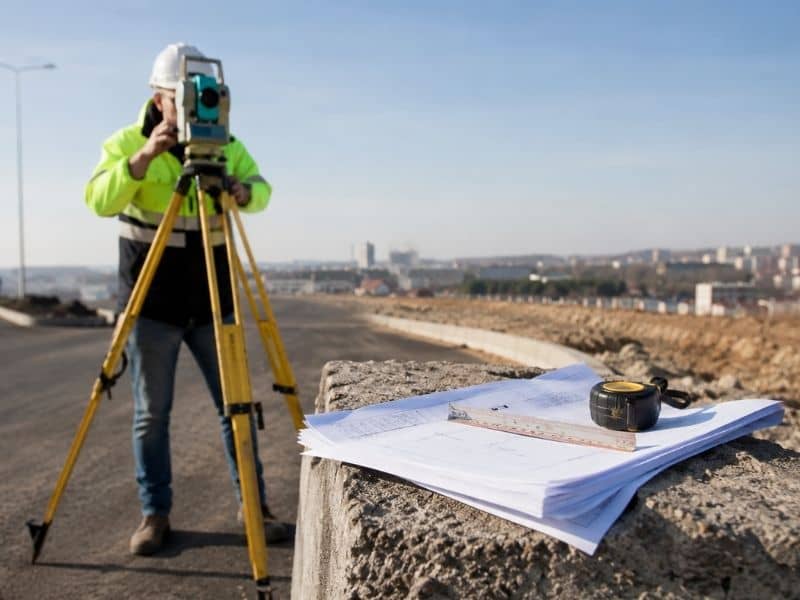
If you have been searching for a property survey cost , you have probably seen the same general ranges repeated on every site you visit. What those pages rarely explain is where the money actually goes, what changes the total, and what you might be charged for that never shows up in an estimate.
What a Property Survey Actually Covers
A property survey is a professional measurement of your land. It confirms the legal boundaries, locates existing corners and markers, and produces a stamped document that can be used for permits, sales, or legal purposes.
What most homeowners do not realize is that a property survey has two distinct phases, and both cost money.
The first is the office phase. Before anyone steps onto your property, a licensed surveyor reviews your deed, checks the county recorder’s office for recorded plats, and researches any prior survey work done on neighboring parcels. This step is necessary because the field measurements only hold up legally when they are tied to a reliable chain of records.
The second is the field phase. The surveyor visits the site, locates or sets boundary markers, takes measurements, and confirms that the physical property matches what the records describe.
Both phases are billed into the final quote. Many homeowners assume they are only paying for someone to walk their lot with equipment. In practice, the office work often takes just as long.
Property Survey Cost in San Francisco: Real Numbers
San Francisco is one of the more expensive markets for surveying in California. Based on completed projects across the city and surrounding Bay Area counties, here is what property owners are paying in 2026:
- Standard boundary survey on a typical city lot: $800 to $1,500
- Mortgage or title survey for a residential sale: $500 to $900
- Topographic survey for construction or grading: $2,000 to $6,500
- ALTA survey for a commercial transaction: $2,500 to $10,000 or more
For context, the national average for a boundary survey runs $500 to $1,000 for one acre. San Francisco regularly exceeds that range because of local labor rates, the complexity of older parcels, and the time required to navigate county records.
The Hidden Line Items That Inflate the Final Bill
Getting a survey quote is not the same as knowing what you will pay. Several charges can appear on a final invoice that were not clearly spelled out at the start.
County recording fees. When a survey needs to be filed with the San Francisco County Recorder’s office, there is a government fee on top of the surveyor’s professional charge. This applies when a Record of Survey is required, which is common for lot line adjustments and subdivision work.
Monument setting fees. If existing boundary markers are missing or damaged, the surveyor will set new ones. Each monument set adds time and material cost. On older San Francisco lots where markers have been disturbed by decades of construction or street work, this can add up quickly.
Permit-related survey requirements. San Francisco has significantly expanded its accessory dwelling unit rules in recent years. Many homeowners adding ADUs need a boundary survey to confirm setbacks and property lines before the city issues permits. If your project triggers this requirement, the survey is not optional and the cost becomes part of your overall project budget.
Certification copies. Some lenders, title companies, and attorneys require multiple certified copies of the final survey document. Depending on the surveyor, additional copies may carry a separate fee.
How Survey Type Changes What You Pay
Not all property surveys are the same, and choosing the right type matters both for cost and for legal usefulness.
A mortgage survey is the most basic. It confirms that a structure sits on the correct parcel and is often requested by lenders during a sale. It costs less because it involves less detail.
A boundary survey goes further. It establishes the exact legal limits of your property, sets or confirms corner monuments, and produces a document you can use for permits, disputes, or future sales. This is the type most homeowners need when they are building, fencing, or resolving a question about their lot.
A topographic survey maps the elevation and physical features of the land, including slopes, drainage patterns, trees, and existing structures. Architects and engineers use this data for design work. It costs more because it requires denser measurements across the entire site.
Understanding which type you actually need before requesting quotes will prevent you from either overpaying for details you do not need or underpaying for a document that does not hold up when you need it to.
What Drives Costs Up on Specific San Francisco Properties
Some properties in the city consistently produce higher quotes than others. Here is what puts a property in that category.
Victorian and Edwardian-era lots. Much of San Francisco’s residential housing stock dates to the late 1800s and early 1900s. Lots from that era were platted under older systems that do not always align cleanly with modern coordinates. Surveyors have to reconcile older deed language with current measurements, which takes more time.
Properties near shared walls. In neighborhoods with row houses and attached structures, locating a boundary that runs through or along a shared wall requires more precision and more documentation than a freestanding parcel.
Sloped lots in hillside neighborhoods. Elevation changes affect how measurements are taken and how long fieldwork takes. A steep lot in Glen Park or the Castro requires more setup time than a flat lot in the Sunset or Excelsior.
Parcels with no recent survey on record. If the last documented survey on your property is decades old or nonexistent, the surveyor has less existing data to work from and must do more original research.
How to Read a Property Survey Quote Accurately
When you receive a quote, ask the surveyor to break it down into components. A reliable quote will separate the research fee, the fieldwork fee, any monument setting costs, and the deliverables, meaning the stamped drawing and any filed documents.
Watch for quotes that seem unusually low. A very low quote sometimes means the surveyor is assuming clean records and a simple lot. If the property turns out to be more complicated, the final invoice will reflect that. Getting a flat-rate quote in writing, rather than an hourly estimate, gives you more predictability.
Also ask specifically whether the quote includes a Record of Survey filing if one is needed. In San Francisco, this is a common requirement for certain types of work, and the filing fee is a real cost that should be accounted for upfront.