
What Land Survey Cost Looks Like in the Real World
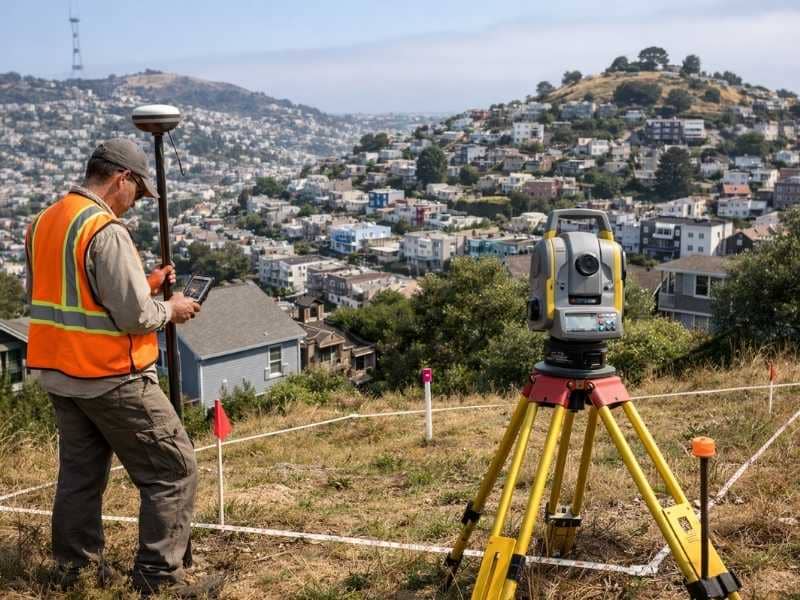
Most people search for a land survey cost expecting a single, clean number. What they find instead is a wide range with very little explanation behind it. That gap is exactly what this article fills. If you own property, the numbers here reflect what people are actually paying today, not the national averages that rarely apply to this part of the state.
Why San Francisco Survey Costs Run Higher Than the National Average
A land survey in San Francisco is not priced the same way as one in suburban Ohio or rural Georgia. Several local factors push the cost up, and understanding them makes the quotes you receive much easier to evaluate.
San Francisco lots tend to be small, but they are far from simple. Many were subdivided in the 1800s using recording systems that predate modern standards. That means surveyors often spend significant time in county records offices before they ever set foot on your property. Research time is billable, and in dense urban counties, that research phase takes longer than most homeowners expect.
Terrain adds another layer. Properties in neighborhoods like Twin Peaks, Bernal Heights, or the outer Sunset sit on sloped or irregular ground. Fieldwork on hillside lots takes more time and more equipment than a flat suburban parcel.
Labor rates in the Bay Area also reflect the local cost of living. A licensed surveyor in San Francisco earns significantly more than one in a lower-cost region, and that wage difference is built into every quote you receive.
What Land Survey Cost Looks Like in San Francisco Right Now
Based on completed projects in the San Francisco area, here is what property owners are paying in 2026:
- Standard residential boundary survey: $800 to $1,500
- Topographic survey: $2,000 to $6,500 depending on lot size and slope
- ALTA survey for commercial property: $2,500 to $10,000 or more
- Overall project range across survey types: $306 to $1,151 for most standard residential work, with a typical midpoint between $568 and $739
Minimum service fees are also common in the Bay Area. Some surveyors set a floor of $650 or higher just to cover the cost of travel, equipment setup, and basic courthouse research, even for smaller lots.
The Factors That Change Your Final Quote
Two properties on the same block can come back with very different quotes. These are the factors that create that gap:
Lots of shape and size. Irregular lots with many corners take longer to survey than standard rectangular parcels. More corners mean more stakes, more measurements, and more time in the field.
Existing survey records. If a licensed surveyor has worked on your property or the surrounding parcels recently, some of that data may already be on file. Surveyors can build on existing records, which reduces research time. Older parcels with no modern survey history cost more to research from scratch.
Access difficulty. If your property is fenced, overgrown, or situated on a steep hillside with limited equipment access, fieldwork takes longer. That time is reflected in the final bill.
Scope of the work. A survey ordered to resolve a neighbor dispute may require more documentation, legal descriptions, and certified deliverables than a survey ordered to confirm lot dimensions before a renovation.
Turnaround time. Rush orders cost more. If you need results within a few days rather than the standard one to three weeks, expect a premium on top of the base rate.
What the Survey Fee Actually Covers
Many property owners are surprised by what goes into a survey before anyone visits the site. A significant portion of the total fee, sometimes between 30 and 50 percent, goes toward historical research. Surveyors pull deed records, prior plats, county assessor data, and any previous survey documents before fieldwork begins. That research is what makes the field measurements legally defensible.
Once on-site, the surveyor uses GPS equipment and traditional instruments to locate and verify boundary corners, measure distances, and confirm that the physical property matches the legal description in your deed. After fieldwork, the data is processed and turned into a stamped, certified drawing that can be used for permits, title purposes, or legal proceedings.
The stamp matters. Only a licensed land surveyor can certify survey results. That certification is what gives the document legal weight.
When a Survey Is Worth the Cost and When It Is Not
Not every property situation calls for a full survey. Here are scenarios where the cost is clearly justified:
- You are buying property and the boundary lines have not been surveyed in decades
- You plan to build a fence, addition, or accessory dwelling unit near the property edge
- A neighbor has raised a question about where the line actually falls
- Your lender or title company has requested a survey as part of a commercial transaction
- You are subdividing a parcel or applying for a lot line adjustment
If you simply want to know the general shape of your property for personal reference, a review of your existing deed and county records may answer basic questions without the cost of a new survey.
Frequently Asked Questions
How do I get an accurate quote for a land survey?
Contact at least two or three licensed surveyors and provide them with your property address, assessor parcel number, and a description of what you need the survey for. The more detail you give upfront, the more accurate the estimate will be.
Does property age affect what I will pay?
Yes. Older properties, particularly those recorded before the mid-1900s, often have less reliable deed descriptions and fewer existing survey reference points. That makes research harder and longer, which raises the cost.
Can I use a survey my neighbor had done on their property?
Not directly. A survey certified for your neighbor covers their parcel, not yours. However, a surveyor can reference your neighbor’s data as part of researching your own lot, which may help reduce research time.
Is a land survey required to sell a home in California?
California does not require a survey for every residential sale. However, title companies may request one if boundary questions exist, and buyers have the right to request a survey as part of their due diligence.
What happens if my survey reveals a problem with my property line?
The surveyor documents the findings in the certified report. From there, you can discuss the issue with a real estate attorney, work with your neighbor to resolve it informally, or pursue a formal boundary agreement. The survey itself does not resolve the dispute. It simply establishes where the line legally falls.